Real Science, Real Impact: Melbourne Uni, Peter Mac, and an Inspiring Salesian Story with Professor Mark Dawson
On Monday the 21st of July our year 12 biology classes went on an excursion to Melbourne university and Peter MacCallum Cancer Centre.
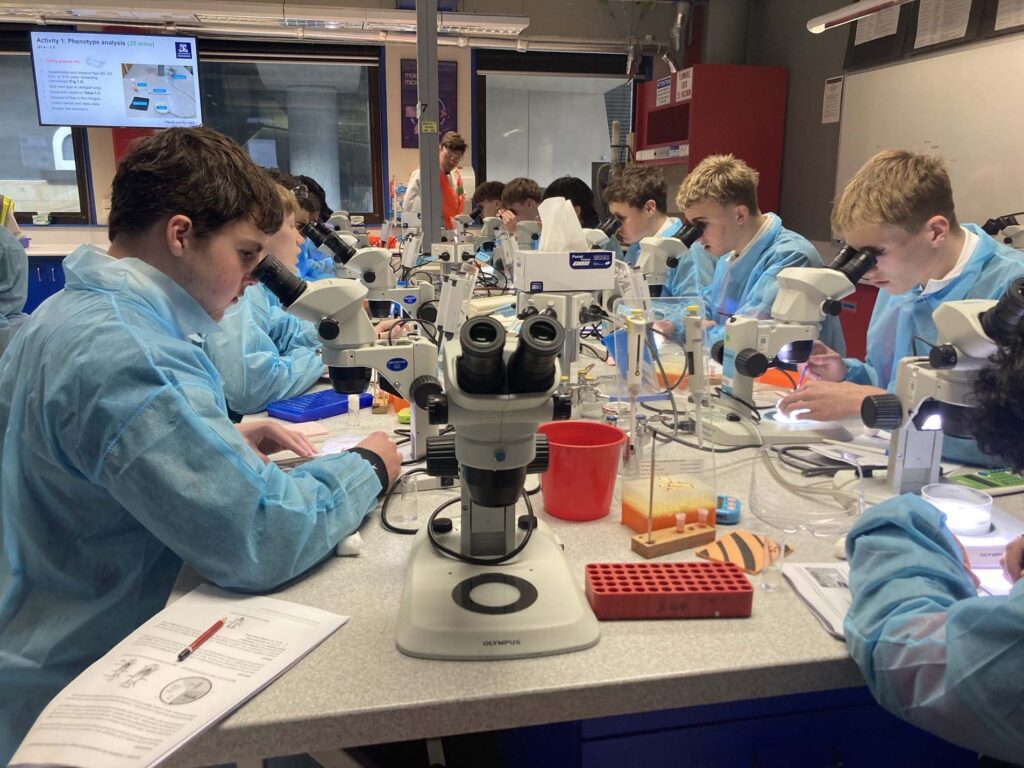
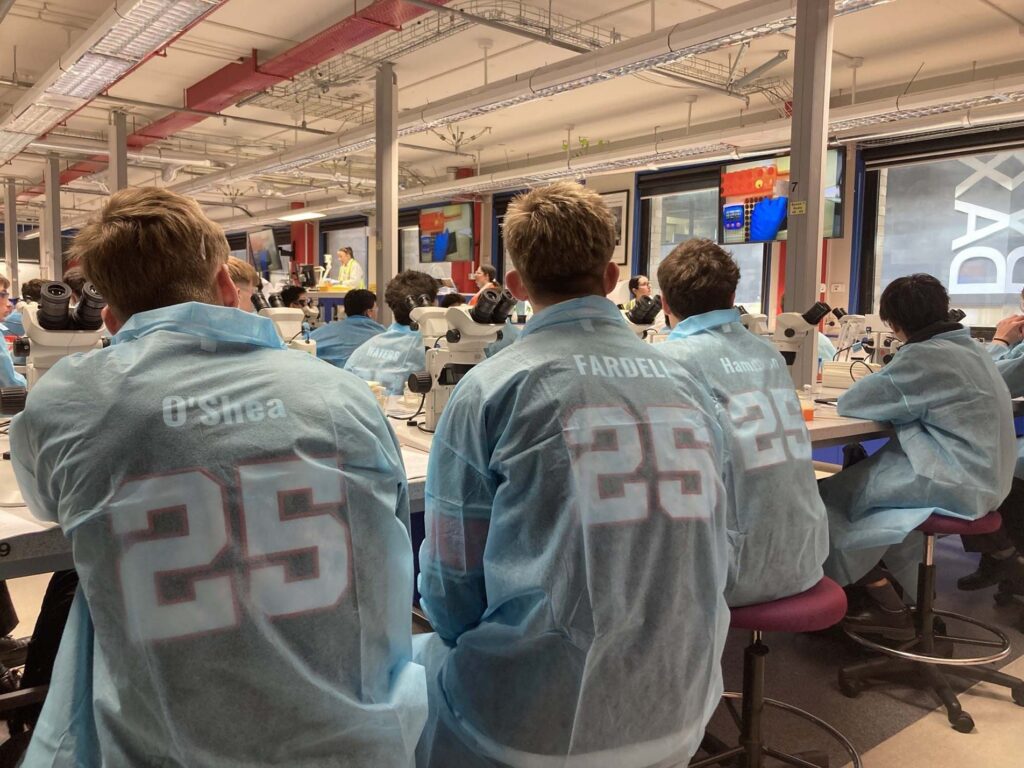
Our day began at University of Melbourne, were we participated in two interactive workshops were our theoretical knowledge was applied in hands on tasks. In workshop one we used fruit flies (drosophila) to examine how patterns of inheritance and genetic variation influence genetic change over generations. This directly linked to some of the key concepts we had being discussing in class such as natural selection, allele frequency, and how genetic changes can lead to biological diversity over time. During these workshops we used real tools that researchers use to examine these changes in populations over time.
In workshop two we performed an ELISA (Enzyme Linked Immunosorbent Assay) to simulate how scientists detect and infections and analyse their severity for determine appropriate treatments. This activity helped to further our understanding of immune responses, antigens and antibodies through hands on tasks while also getting a firsthand experience into what life in a biology-based job might involve.
In the afternoon after a short lunch break, we visited one of Australia’s leading cancer research facilities the Peter MacCallum Cancer Centre. We were welcomed with a presentation by Salesian College Chadstone alumni Professor Mark Dawson, now Associate Director of Research, Consultant Haematologist, and Head of the Cancer Epigenetics Laboratory. Professor Dawson spoke about career pathways in science and the groundbreaking work happening at the Peter Mac. Afterwards we were guided by two PhD researchers for a guided tour of the Epigenetics lab. We explored how genetic mutations contribute to cancer, and the incredible advances being made through genomic sequencing and personalised treatments. We even saw how technologies that we had being learning about in class such as CRISPR Cas9 are used to study and treat cancer at the cellular level.
We would like to give a huge thanks to our teachers; Mr Chen and Ms O’Connell, the University of Melbourne’s School of BioSciences, and the brilliant staff at Peter Mac for such an inspiring experience. A special thanks to Professor Dawson for taking time out of his busy schedule for us. This experience has really helped to build on our own knowledge as well as opening our eyes to some of the exciting future careers we can pursue in medicine and science.
Hamish Saffin
Year 11 Student